Everything is Built With Conservation in Mind at BloomingtonVegetable Farm

Observing the dedication and hard work that go into maintaining The Table Farm and Workshop in Bloomington, Illinois, offers a truly inspiring example of thoughtful stewardship. The fact that everything is done by hand, without even using a tractor, speaks volumes about Kyan Glenn’s commitment to the soil. When he purchased the property in November 2019, it was just a house in the country, but he has now transformed it into a 4.5-acre quintessential example of permaculture, with every square inch being utilized.
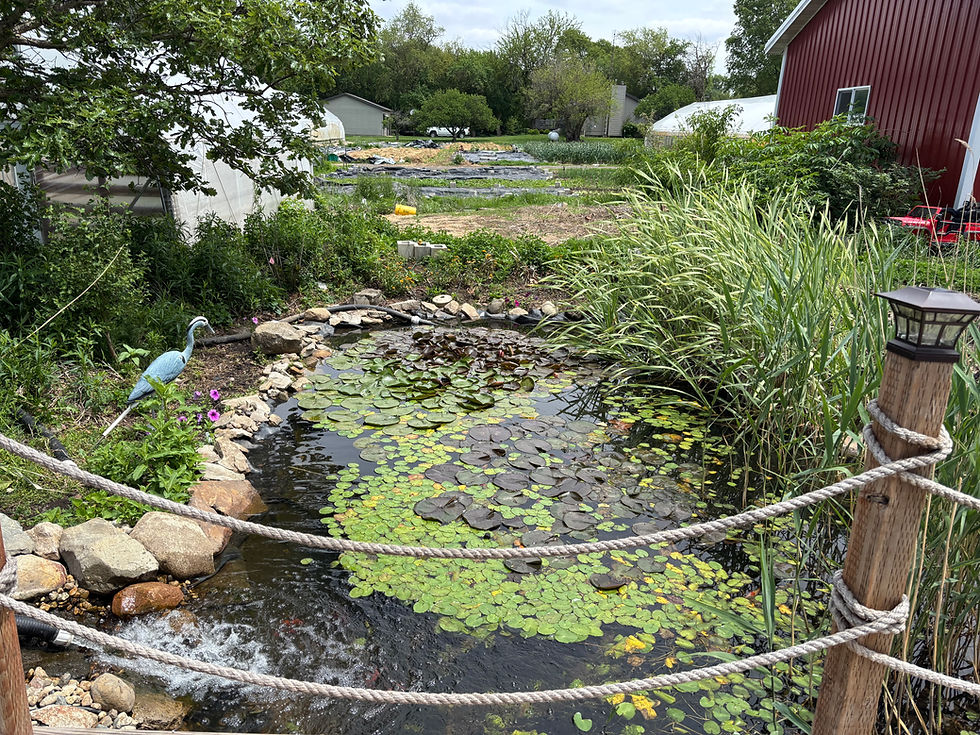
Kyan began his tour by showing me a small pond that he built near the house, which serves multiple purposes as do most of the structures found on his farm. Explaining his thoughts behind this construction, he said, “The way we built it is intentional because if you look, there’s a berm on the backside here. This will catch a two-inch rain event and keep all the water here. So, all the runoff from all my roofs and stuff, it used to come right here and would flood my pasture, and all of that would be unusable for weeks. So, we built a pond, and then we intentionally built this berm on the backside to slow this water and keep it here. Because we have a stable water source, this attracts all kinds of native wildlife.”
USDA-NRCS funded two large high tunnels on the property, and the second one was just built last fall. So, this is the first growing season that he has been able to grow tomatoes and peppers in one while housing greens, root vegetables and other winter crops in another. Now that he has two, he can rotate from year to year. The one that houses the tomatoes and peppers also includes basil and flowers, along with juicy cucumbers and the sweetest, most crunchy Hakurei turnips that he kindly shared with me. In late spring, the other tunnel included collards, mustard greens, chard, kale, lettuce, carrots, bush beans, and celery. They also improve the soil in their high tunnels by rotating their chickens through these structures in the winter.

USDA-NRCS funded two large high tunnels on the property, and the second one was just built last fall. So, this is the first growing season that he has been able to grow tomatoes and peppers in one while housing greens, root vegetables and other winter crops in another. Now that he has two, he can rotate from year to year. The one that houses the tomatoes and peppers also includes basil and flowers, along with juicy cucumbers and the sweetest, most crunchy Hakurei turnips that he kindly shared with me. In late spring, the other tunnel included collards, mustard greens, chard, kale, lettuce, carrots, bush beans, and celery. They also improve the soil in their high tunnels by rotating their chickens through these structures in the winter.
As Kyan explained, “The chickens don’t need to come in here during the winter, but the water does not freeze in here. When the tomatoes and whatnot are done here in December, we will put the birds in here for a month or month and a half, and they will completely clear everything out for me, while also fertilizing it. They will be in that one for about a month, month and a half, then rotate to the other one for a month, month and a half. So, we are still getting animal rotation into that cropping system, and I don’t fertilize beyond that.”
Kyan’s farm is Certified Naturally Grown, which provides a more affordable and accessible alternative to organic certification for ecologically minded farmers. The most disturbance their soil ever gets is from a broadfork. The soil is always covered, either with compost or a tarp when a bed is not in use, and crops are regularly rotated across the farm. He uses heavy duty silage tarps to keep soil covered until it's ready to be planted, but also when he needs to flip a bed that has gone to weeds, covering it for a week in the summer before pulling the tarp and replanting it.

Another way that he avoids disturbing the soil is by utilizing the Ruth Stout method for growing no-dig potatoes. Explaining how this method works, Kyan said, “You leave the potatoes on the soil surface and bury them in a minimum 8-inch layer of hay, and then when they are done, you just move the hay aside. We do something similar for the garlic, where I barely bury that in the soil and then do a heavy layer of hay, and what I notice is that wherever my garlic is… the following year, my soil is pristine after that. It’s so healthy, because it consumes all that hay nutrients.” When the potatoes and garlic are done, they use the hay as mulch somewhere else or compost it and fill that plot with a summer cover crop mix that includes Sorghum-Sudangrass, buckwheat and radish.
Kyan utilizes a silvopasture system for his livestock, which includes pasture grasses and apple trees along with an already established timber to provide shade for the animals. Since it is nearly impossible to grow a marketable apple organically, any apples they do not consume themselves are left for the pigs. As we approached the pig pen, they ran to us and squealed with excitement. Kyan explained that Idaho Pasture Pigs are known for being friendly and were bred to have an upturned snout for grazing on pasture. They happily munched on the turnip greens and cucumber scraps that we tossed over to them as we continued our discussion of his rotational grazing system.

McLean County Conservation Planner Johnny Anians visited The Table Farm and Workshop while assisting with Kyan’s EQIP application for a high tunnel, which was paired with funding for mulch, wildflower pollinator plots, and bird houses. Describing what he learned about silvopasture he said, “I had heard of the term before and had a general idea of the concept but had not ever (knowingly or thoughtfully) walked through one in action. So, I learned more about that from Kyan as he gave us the tour: how he rotates his animals, reasoning for his species selection, and so on. It also prompted the research bug in me to find out more information when I got back to the office.”
Each week, he moves his entire pig system and chicken system (fence, water, shelter) to a new plot, mimicking nature and the way that herds move while being chased by predators. Describing the way this system affects the ground, he said, “It’s pure chaos, followed by a really long period of rest. And that cycle of chaos and disturbance followed by rest is the only way to regenerate soil, that’s what regenerative farming is.”

When everything moves, the chickens go to the plot where the pigs were to clean things up. Kyan said, “When the birds rotate behind, they are going to go through all that manure, scratch through it, pull those flies and larvae out, and spread it out to an appropriate amount. So, I have zero nutrient runoff, all the nutrients are going here into my soil and staying with us.”
Kyan has witnessed the difference this system has made in the soil over the past several years, explaining that grass can reach over 15 ft tall in the summer. He said, “It’s amazing how fast they can regenerate soil and bring it back to life. The first year we were here, I did not know any of this. Grass was so small and sickly, and I started panicking thinking we did not have any fertility. One year of chickens, and the grass was up to here. Then we had chickens and pigs, and the grass was up to my head. If I let it grow, I will have 15 to 20 ft grass in a single growing season, and then they come through and eat it in a week.”
Reflecting on his time visiting the Table Farm and Workshop, Johnny said, “It really takes forethought and good planning to design both a productive and beneficial system. It seems like the optimal method for smaller farms since you are fully utilizing the limited space while simultaneously providing habitat and reducing other harmful effects that can come about from conventional setups.”


Comments